
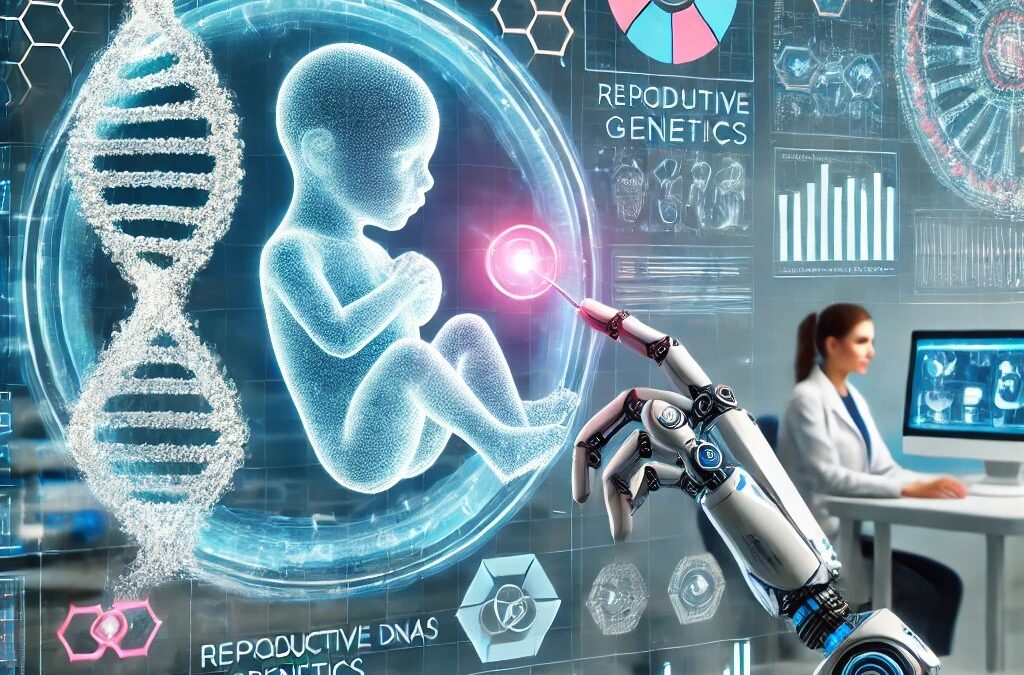
What is reproductive genetics, and what is its main aim in modern medicine?
Reproductive genetics is a branch of medicine that focuses on identifying and addressing the genetic factors that can affect fertility, conception and the health of the future baby. Its main objective is to prevent genetic diseases, improve success rates in fertility treatments and guarantee the best possible health for the offspring.
How does artificial intelligence transform the field of reproductive genetics?
AI revolutionises this field by offering tools to analyse huge volumes of genetic data quickly and precisely. It enables the identification of genetic mutations, the prediction of risks of hereditary diseases and the optimisation of processes, such as embryo selection in IVF treatments.
How does AI help to predict the genetic risks or identify hereditary mutations in couples who are seeking pregnancy?
AI can calculate the probability of transmission of a genetic disease by processing the DNA data of both parents. Tools like carrier analysis allow for foreseeing the chance that the children can inherit such conditions as cystic fibrosis, thalassemia or rare metabolic disorders.
What role does AI have in embryo selection to increase the success rates of fertility treatments?
Algorithms can analyse multiple parameters (morphology, genetic quality and the dynamics of embryo development) to pick out the embryo with the highest probability of implantation and the lowest risk of genetic anomalies, which significantly improves the success of IVF.
How does AI contribute to the progress of custom therapies to tackle fertility problems connected to genetic factors?
AI analyses genomic, hormonal and metabolic data to design treatments adapted to each individual. A couple of the examples are customised ovarian stimulation and selection of specific protocols for IVF as per the genetic characteristics of the partner.
Could AI predict with precision not only genetic risks, but also phenotypic features such as intelligence or height in the future?
In theory, AI is already capable of correlating certain genetic combinations with complex phenotypic characteristics. And yet, these predictions are probabilistic and depend on numerous external factors, for example, the environment, so they cannot be completely precise yet.
How is the panorama of reproductive genetics in the next 10-20 years considering the progress of AI?
Faster and more affordable genetic diagnostics.
Integration of genetic editing with AI to prevent illnesses before embryo implantation.
More mature ethics, which regulate the use of these technologies to avoid inequalities.
Daniel García
Embryologist